Views: 0 Author: Site Editor Publish Time: 2026-05-09 Origin: Site
Have you ever wondered how much it costs to install a high mast light pole? These towering structures illuminate large areas but vary widely in price. In this article, we break down the factors that affect installation costs, including height, materials, and labor. You will learn what impacts budgeting and how Dison high mast light poles provide durable, efficient solutions for large outdoor spaces.
When you start planning a high mast light pole, the first factor that sets the tone for the entire project is height. Taller poles do more than just reach higher—they change material needs, foundation size, and even transportation requirements. It helps to understand how height impacts the rest of the system:
Material requirements: Taller poles like 30m or 40m need thicker steel and heavier flanges, which directly affects fabrication and shipping costs.
Engineering considerations: Flange dimensions, anchor bolt length, and pole tapering must meet wind-load expectations, keeping the structure stable under extreme conditions.
Application match: Choosing the right height ensures coverage without overengineering, balancing cost with practical illumination.
Pole Height | Material Weight | Flange Size | Approx. Base Cost |
|---|---|---|---|
15m | 800 kg | 600×600×25mm | $1,500–$2,000 |
20m | 1,200 kg | 800×800×30mm | $2,000–$3,000 |
30m | 2,000 kg | 1000×1000×30mm | $3,500–$5,000 |
40m | 3,200 kg | 1200×1200×35mm | $5,000–$8,000 |
Taller poles may require multi-section fabrication and larger cranes, so it is essential to match height with the area’s illumination needs.
After considering height, the next question naturally turns to durability. Materials and coatings determine how long a high mast light pole lasts, how often it requires maintenance, and its total cost. Before selecting lighting or lifting systems, you should think about protection first:
Steel quality: Q235 steel provides enough strength to withstand wind speeds above 30 m/s, keeping the pole safe and stable.
Surface protection: Hot-dip galvanization plus optional marine-grade coatings prevent corrosion, which reduces long-term replacement and repair expenses.
Investment payoff: Spending a bit more upfront on quality materials can prevent frequent repainting or complete pole replacement, saving money over decades.
Once height and material are set, the focus shifts to the lights themselves. The number of LEDs and their wattage not only impacts illumination but also costs for installation and energy. To understand the trade-offs, consider how lighting layout interacts with pole height:
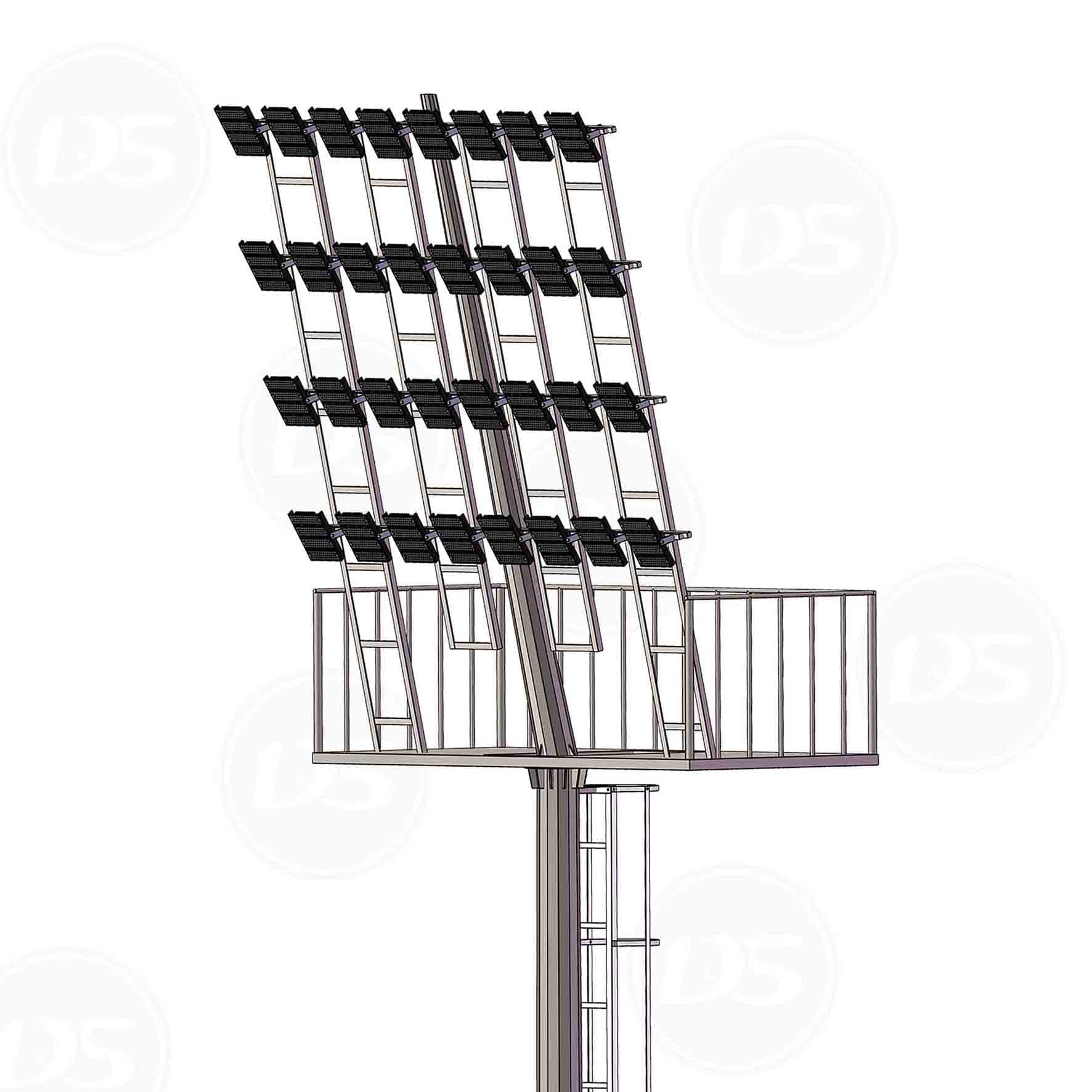
Lighting coverage: A small parking lot may only require 4–6 luminaires, while an airport apron or stadium might need 12 or more to maintain uniform brightness.
Power considerations: Higher wattage LEDs increase both fixture costs and energy usage, so choosing efficient LEDs balances brightness and operational expense.
Installation layout: Proper spacing and aiming angles ensure even illumination, reduce glare, and improve safety without adding unnecessary equipment.
Finally, maintenance considerations are essential for long-term performance. High mast poles often feature raising and lowering systems to make servicing lights safe and efficient. To fully appreciate their value, it’s helpful to see how these systems impact both safety and cost:
Manual vs automatic: Manual systems require cranes or ladders, while automatic lowering allows the ring to descend safely for inspection or lamp replacement.
Maintenance efficiency: Automatic systems reduce labor risk and make routine checks faster, which can save time and money over years.
Cost trade-off: Automatic systems increase initial investment, but simplify long-term servicing, especially for tall poles in hard-to-reach areas.
Installing a lifting system ensures the high mast light pole continues to provide reliable illumination without constant high-altitude work.
Before any pole can be erected, a solid foundation must be in place. The foundation not only supports the weight of the high mast light pole but also ensures stability against wind and vibration. It’s critical to consider how the environment affects design:
Soil condition: Sandy, clay, or rocky soils influence the depth and reinforcement required. Poor soil may need additional pilings or larger footings to prevent settling.
Wind load: Taller poles catch more wind, so foundations must be designed to resist overturning forces and lateral pressure.
Pole height: The higher the pole, the more robust the base. Foundation size scales with height, affecting both material and labor costs.
Pole Height | Soil Type | Recommended Foundation Depth | Approx. Base Material Cost |
|---|---|---|---|
15–20m | Medium soil | 1.5–2.0 m | $500–$800 |
30m | Sandy/loose soil | 2.5–3.0 m | $1,200–$1,800 |
40m | Clay/rocky soil | 3.0–3.5 m | $2,000–$3,000 |
Proper planning here reduces the risk of uneven settling or structural failure over time.
Even the best foundation design can be compromised if the site is difficult to access. Preparing the site is as important as pouring concrete. Before the first truck arrives, consider the logistical challenges:
Site grading: Level ground ensures safe crane operations and prevents shifting during installation.
Access roads: Wide, stable roads are needed to transport heavy pole sections and construction equipment.
Restricted sites: Urban areas, airports, or industrial zones may require special permits or limit crane usage, increasing labor and equipment costs.
These factors often extend the project timeline and influence the final installation budget.
Once the pole is in place, it’s time to wire the lights. Electrical work includes more than simply connecting the luminaires—it also protects the system and optimizes operation. Considering these elements early can prevent unexpected expenses:
Cable installation and grounding: Proper routing ensures safe operation and compliance with regulations.
Surge protection: Protects luminaires from lightning or voltage spikes, reducing maintenance and replacement costs.
Smart control options: Dimming, timers, and remote monitoring improve energy efficiency but add to initial costs.
Careful coordination of foundation, site prep, and electrical systems ensures the high mast light pole performs safely and reliably for decades.
Transporting a high mast light pole requires careful planning because size, weight, and distance directly affect cost. Poles are often very long and heavy, meaning standard trucks may not suffice. Sectioned poles are easier to ship in pieces, reducing risk of damage and allowing access to tight sites, but they require extra assembly on-site. Single-piece poles avoid assembly but may need specialized transport equipment and escorts, increasing overall expense. Consider the following factors:
Pole size and weight: Larger, heavier poles need flatbeds, sometimes oversize permits, and specialized handling during loading and unloading.
Shipping distance: Longer transport routes increase fuel, labor, and insurance costs, especially if roads are narrow or restricted.
Sectioned vs single-piece poles: Sectioned poles simplify transport but require precise on-site alignment and bolting, which adds time and labor costs.
Careful planning of pole transport reduces risks, avoids delays, and ensures equipment arrives intact for installation.
Once the poles arrive, proper installation is essential. High mast light poles require cranes, rigging, and a skilled team to secure the structure safely. Labor costs vary depending on site complexity, height of the pole, and safety requirements. Experienced installers can manage risks and optimize setup time, which ultimately affects the total project cost.
Crane usage and rigging: High mast poles need large cranes to lift heavy sections; rigging must be precise to avoid tilting or damage.
Specialized installation teams: Professionals handle bolting, leveling, and alignment. Their expertise reduces errors and ensures long-term stability.
Safety and labor rates: Compliance with local regulations, protective equipment, and skilled labor influence both cost and project scheduling.
Installation Task | Equipment Needed | Labor Intensity | Typical Cost Range |
|---|---|---|---|
Lifting & positioning pole | Crane, rigging tools | High | $1,000–$2,500 |
Bolt assembly & alignment | Wrenches, torque tools | Medium | $500–$1,000 |
Safety supervision | PPE, fall arrest systems | Low–Medium | $200–$600 |
Proper coordination between transport and installation teams ensures the high mast light pole is erected efficiently, safely, and ready for electrical wiring and lighting installation.
When planning a high mast light pole project, understanding typical cost ranges helps set realistic budgets. Costs vary based on pole height, material, luminaire configuration, foundation, and labor. Small projects, like parking lots, often require shorter poles and fewer fixtures, keeping costs lower. Medium projects, such as industrial yards, may need taller poles and more lights, increasing both material and installation expenses. Large-scale projects, including stadiums or airports, demand high poles, heavy-duty foundations, multiple luminaires, and sometimes automated lifting systems, which significantly raises the budget. Consider these examples:
Small projects: 15–20m poles, 4–6 luminaires, standard foundation, moderate labor. Typical cost: $3,000–$6,000 per pole.
Medium projects: 20–30m poles, 8–12 luminaires, reinforced foundation, specialized labor. Typical cost: $6,000–$12,000 per pole.
Large projects: 30–40m poles, 12–16 luminaires, large foundation, automatic lifting system, crane work. Typical cost: $12,000–$20,000+ per pole.
Project Size | Pole Height | Luminaires | Foundation Type | Approx. Cost per Pole |
|---|---|---|---|---|
Small | 15–20m | 4–6 | Standard | $3,000–$6,000 |
Medium | 20–30m | 8–12 | Reinforced | $6,000–$12,000 |
Large | 30–40m | 12–16 | Heavy-duty | $12,000–$20,000+ |
Breaking down the cost helps identify where savings are possible and which elements drive total expenditure, such as specialized labor or automated lifting systems.
The type of site and purpose of the high mast light pole also influence costs. Stadiums require uniform, high-intensity lighting, while highways prioritize coverage over aesthetics. Ports and industrial areas may need corrosion-resistant materials and robust foundations to handle harsh environments. Parking lots generally have moderate requirements but often need wider spacing between poles.
Stadiums: High pole height and multiple luminaires to ensure consistent brightness; higher material and labor costs.
Highways: Long linear coverage requires precise pole spacing and high wind-resistance foundations.
Ports and industrial areas: Marine-grade coatings and reinforced bases to handle harsh environments; extra cost for durability.
Parking lots: Moderate height and fewer luminaires; installation simpler but still requires proper alignment and safety compliance.
By analyzing project type, illumination requirements, and site complexity, you can better estimate budget allocations for a high mast light pole installation.
Dison high mast light poles provide durable and efficient outdoor lighting solutions. Costs vary by height, materials, foundation, and installation complexity. They offer corrosion resistance, optional lifting systems, and reliable LED performance. Dison supports safe installation, long-term maintenance, and tailored designs, ensuring value for stadiums, highways, ports, and parking areas.
A: A high mast light pole is a tall outdoor lighting structure designed to illuminate large areas efficiently.
A: Costs depend on pole height, materials, luminaires, foundation, and installation complexity.
A: They provide durable steel, corrosion protection, optional lifting systems, and reliable LED lighting.
A: Installation requires cranes, foundation work, electrical wiring, and specialized labor for safety.
A: Pole material, anti-corrosion treatment, lifting system, and environmental conditions determine upkeep.