
Views: 0 Author: Site Editor Publish Time: 2026-04-13 Origin: Site
Why are more cities choosing Solar Street Light systems in 2026? They reduce energy costs while improving flexibility for modern projects.
This guide explains how Solar Street Light systems work, compares different types, and helps you choose the right solution. You will learn what features matter and how to make smarter decisions.
A Solar Street Light is an outdoor lighting system powered by sunlight instead of grid electricity. It uses solar panels to collect energy during the day, then stores it in a battery, and finally powers LED lighting at night. This setup removes the need for trenching, cabling, or connection to utility infrastructure, which makes it especially practical for both urban and remote installations.
Compared to traditional lighting, it changes how projects are planned. You do not need complex wiring. You do not rely on unstable power supply. You can install it faster, often in a single day depending on site conditions. That flexibility is one reason why companies like Dison structure their Solar Street Light product range based on real applications such as residential roads, highways, and public spaces.
In 2026, the demand for Solar Street Light continues to grow. Cities want energy independence. Developers want lower long-term cost. Rural areas need reliable lighting without grid expansion. It also supports sustainability goals, which are now part of most infrastructure planning.
Understanding how a Solar Street Light works helps you choose the right system. The process is simple, but each step plays an important role in performance and reliability.
Daytime charging: The solar panel captures sunlight and converts it into electrical energy. The efficiency of this step depends on panel quality and sunlight conditions.
Energy storage: The electricity is stored in a lithium battery. This stored energy powers the system during the night or cloudy periods.
Night operation: When light levels drop, the system automatically turns on. LED fixtures provide consistent illumination based on preset settings.
Smart control: A controller manages charging and discharging. It protects the battery, optimizes energy use, and can adjust brightness based on motion or timing.
To make this clearer, here is how each component contributes to the system:
| Component | Function Description |
|---|---|
| Solar Panel | Converts sunlight into electricity during the day |
| Battery | Stores energy for night use and cloudy days |
| LED Light | Provides high-efficiency illumination |
| Controller | Manages energy flow, timing, and protection |
In more advanced systems, the controller does more than basic switching. It can reduce brightness during low traffic hours. It can increase output when motion is detected. It can even send data through IoT systems for remote monitoring.
That is why modern Solar Street Light solutions feel more intelligent. They are not just lights. They are energy-managed systems that adapt to real-world conditions.
An All in One Solar Street Light combines all core components into a single compact unit. It integrates the solar panel, battery, LED light, and controller together. This design reduces external wiring and simplifies installation. Many buyers prefer it because it saves time and reduces installation errors on site.
You will often see this type used in smaller or medium-scale projects. It works well where speed and simplicity matter more than extreme power output. Dison offers multiple All in One models designed for flexible outdoor use, especially in community environments.
Key use scenarios include:
Residential roads: It provides stable lighting for neighborhoods. It keeps installation simple. It avoids complex groundwork.
Parks and pathways: It fits well in areas where aesthetics and compact design matter. It also reduces visual clutter.
Temporary or fast-deployment projects: It installs quickly. It does not depend on grid connection.
Main advantages buyers care about:
Easy installation: It usually requires only pole mounting. No trenching or cable laying is needed. This reduces labor cost significantly.
Low maintenance: Since components are integrated, there are fewer exposed parts. This reduces failure points over time.
Smart options available: Many models include PIR sensors or CCTV. They improve energy efficiency and security.
An All in Two Solar Street Light separates the solar panel from the lighting fixture. The battery and controller are still integrated into the lamp, but the panel is mounted independently. This structure improves energy collection and allows higher system performance.
Compared to All in One systems, it offers more flexibility. It handles larger roads better. It supports higher wattage output. Dison positions this type for more demanding infrastructure projects.
Here is a quick comparison to help you understand the difference:
| Feature | All in One Solar Street Light | All in Two Solar Street Light |
|---|---|---|
| Structure | Fully integrated | Panel separated |
| Installation | Simpler and faster | Slightly more complex |
| Power Output | Medium | Higher |
| Best Applications | Residential, parks | Highways, main roads |
| Flexibility | Limited | More adjustable |
Typical applications include:
Highways and expressways: It provides stronger lighting output. It supports wider road coverage.
Urban main roads: It handles higher traffic areas. It ensures consistent brightness.
Industrial zones: It performs well in areas requiring higher illumination levels.
Key benefits include:
Better solar efficiency: The panel can be positioned at an optimal angle. This improves charging performance.
Higher system capacity: It supports larger batteries and stronger LED output.
Adaptability: It fits projects where conditions vary and require customization.
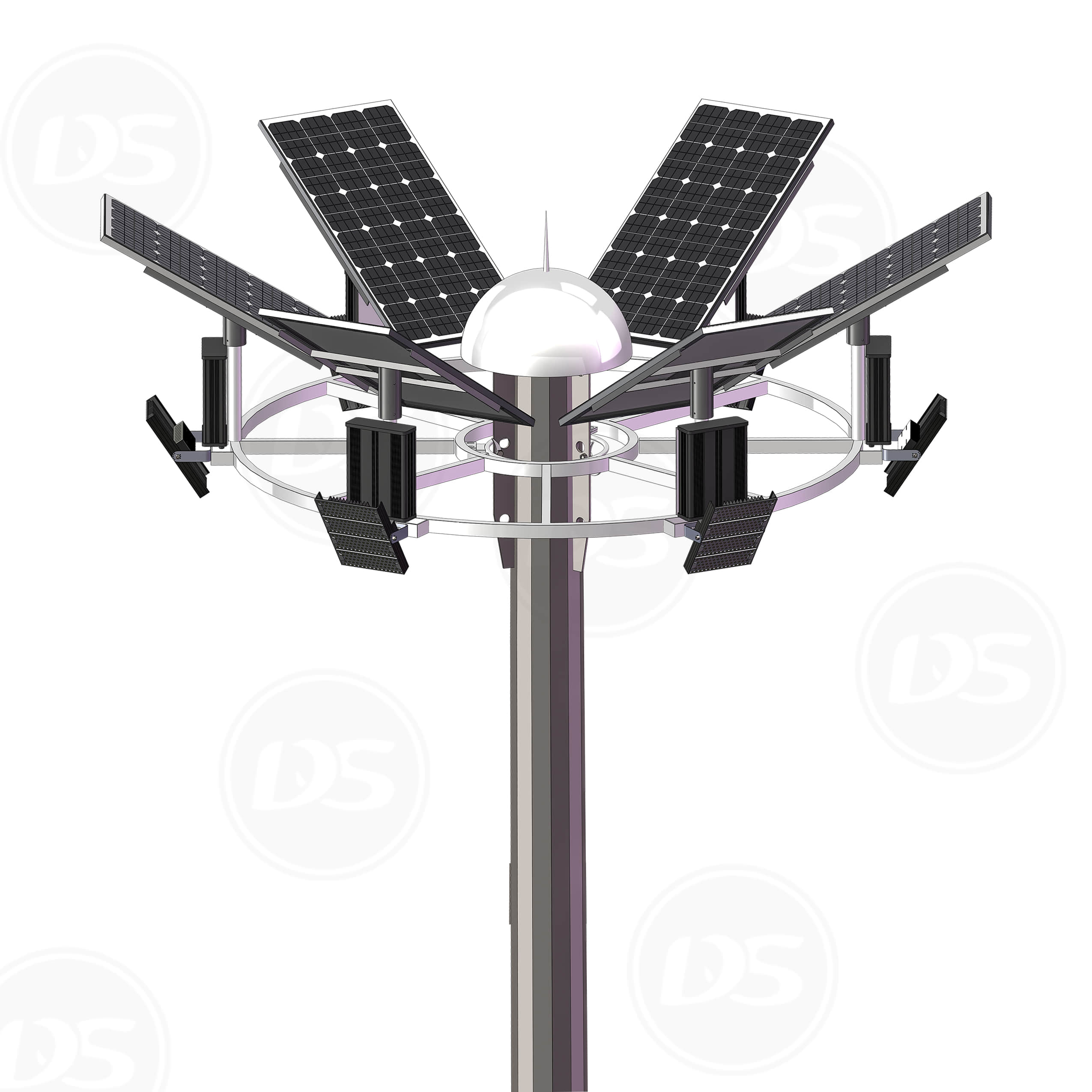
A Vertical Solar Street Light uses a different panel layout. Instead of placing the panel flat on top, it mounts panels vertically along the pole. This design changes how the system interacts with the environment.
This type is not just about appearance. It solves real environmental challenges. Dison includes this category to address locations where traditional designs may struggle.
It is especially useful in:
Windy coastal areas: Vertical panels reduce wind resistance. This improves structural safety.
Desert or dusty regions: Dust does not settle as easily. This helps maintain panel efficiency.
Snow or harsh weather zones: It reduces accumulation on panels. This improves reliability.
Key advantages explained:
Improved durability: The structure handles strong winds better. It reduces stress on mounting systems.
Lower maintenance frequency: Dust and debris build-up is reduced. Cleaning is needed less often.
Consistent performance: It maintains better energy absorption in challenging environments.
When compared to standard designs, it performs better in extreme conditions. It is not always necessary for every project, but it becomes valuable when environmental factors are a concern.
Solar Wind and Smart Solar Street Light systems represent the next step in outdoor lighting evolution. They combine energy innovation and intelligent control. These systems are becoming more common in 2026 as projects demand higher efficiency and smarter management.
Solar Wind Street Light systems combine solar panels and wind turbines. They generate energy from two sources. This improves reliability when sunlight is inconsistent. It is useful in regions with variable weather patterns.
Smart Solar Street Light systems focus on control and data. They include features such as sensors, IoT modules, and monitoring tools. Dison integrates options like PIR sensors and CCTV into its product lineup, which reflects growing demand for multifunctional lighting systems.
One of the biggest reasons people choose a Solar Street Light is cost control. It removes long-term electricity expenses. It also simplifies installation work. Over time, this creates a strong financial advantage, especially for large-scale projects.
Instead of relying on grid power, it uses sunlight. This means:
No electricity bills: Once installed, it runs independently. Energy from the sun powers the system every day. This helps reduce operational expenses over the system lifespan.
No trenching or underground wiring: Traditional lighting requires digging, cabling, and connection work. Solar systems avoid all of that. This lowers labor cost and speeds up construction.
Lower installation complexity: Most systems are installed on poles without heavy infrastructure. This makes it easier for contractors to manage projects efficiently.
A Solar Street Light works independently from the power grid. This makes it highly suitable for locations where electricity access is limited or unreliable. It brings lighting to places where traditional systems would be too expensive or impractical.
Typical use scenarios include:
Rural roads and villages: It provides consistent lighting without extending power lines. This is important for safety and mobility in remote communities.
Mountain or isolated regions: It installs easily even in difficult terrain. It does not depend on grid expansion projects.
Temporary or developing areas: It supports quick infrastructure setup. It can be deployed and relocated when needed.
Key advantages in these environments:
Energy independence: It generates and stores its own energy. There is no reliance on unstable or unavailable grid supply.
Reliable night lighting: Even in remote areas, it ensures visibility and safety. Modern batteries support continuous operation for multiple nights.
Fast deployment: It reduces project timelines. No waiting for utility connections or approvals.
In 2026, sustainability is no longer optional. It is part of infrastructure planning. A Solar Street Light directly supports environmental goals by using renewable energy and reducing dependence on fossil fuels.
The system operates using sunlight. It produces no emissions during operation. It also reduces the need for traditional power generation. This makes it a cleaner lighting solution for cities and communities.
Key environmental benefits include:
Clean energy usage: It uses solar power, which is renewable and abundant. This reduces reliance on non-renewable energy sources.
Lower carbon footprint: It helps decrease greenhouse gas emissions. Over time, this contributes to cleaner urban and rural environments.
Reduced environmental disruption: No trenching means less damage to soil and surrounding ecosystems. This is important in protected or sensitive areas.
Additional sustainability advantages:
Longer LED lifespan reduces waste
Efficient battery systems improve energy utilization
Smart controls reduce unnecessary energy consumption
Modern systems, including those from Dison, also integrate smart features. These help optimize energy use and reduce waste. As cities move toward greener infrastructure, Solar Street Light becomes a key part of sustainable development.
Choosing the right Solar Street Light always starts from the project scenario. We do not begin with wattage. We begin with where it will be used. Different environments demand different lighting levels, system structures, and installation approaches. If you match the product to the application first, you avoid most common mistakes.
Let’s break it down by typical use cases:
Residential streets: These areas need moderate brightness and stable operation. It should not be too strong. It should not create glare. Integrated Solar Street Light systems often work well here. They are compact. They are easy to install. They blend into the environment.
Highways and main roads: These require higher brightness and wider coverage. It must support consistent illumination for safety. In this case, systems like All in Two Solar Street Light are more suitable. They allow higher power output and better energy management.
Parks and pathways: Here, design and flexibility matter more. Lighting should be soft but sufficient. It should be easy to install in areas without infrastructure. Compact Solar Street Light models are usually preferred.
Industrial and commercial areas: These spaces require durability and stronger lighting performance. It should handle longer operating hours. It should perform under demanding conditions.
Manufacturers like Dison structure their product range based on these real scenarios. It helps buyers choose faster. It reduces mismatch between product and application.
Once the application is clear, the next step is technical evaluation. This is where many buyers feel confused. They see numbers, but they are not sure what matters most. We should focus on a few core parameters. These determine how well the Solar Street Light performs in real conditions.
Important technical factors include:
Power and brightness: It defines how much light the system produces. Higher wattage does not always mean better. It depends on road width and lighting requirement. You should match brightness to the actual use case.
Battery capacity and backup time: It determines how long the system can run without sunlight. This is critical for cloudy or rainy days. A reliable Solar Street Light should support multiple backup days.
Solar panel efficiency: It affects how fast the system charges. Higher efficiency panels generate more energy in limited sunlight. This improves system reliability.
Charging and discharging control: A good controller protects the battery. It ensures stable operation. It also extends system lifespan.
In many modern systems, including those from Dison, these components are optimized together. That improves system balance. It avoids overdesign or underperformance.
In 2026, Solar Street Light is no longer just about lighting. It is about intelligence and efficiency. Smart features are becoming standard, especially in urban and infrastructure projects. They help reduce energy waste. They improve control. They add new functionality.
Let’s look at the most useful features:
Motion sensors (PIR or microwave): These detect movement and adjust brightness. When no one is around, the light dims. When motion is detected, it brightens. This extends battery life and saves energy.
IoT monitoring systems: These allow remote control and data tracking. Operators can check system status. They can detect faults early. They can manage multiple Solar Street Light units from one platform.
CCTV integration: This adds security value. It combines lighting and surveillance in one system. It is useful in public areas, roads, and industrial zones.
Here is how these features compare:
| Smart Feature | Function | Benefit |
|---|---|---|
| PIR Sensor | Motion detection | Energy saving, longer battery life |
| IoT System | Remote monitoring | Better management, faster response |
| CCTV Integration | Video surveillance | Improved safety and security |
When choosing features, think about the project goal. If it is a simple rural road, basic lighting may be enough. If it is a city project, smart features add real value. Dison integrates these options into its Solar Street Light systems, making it easier to adapt to different project needs.
Solar Street Light systems improve efficiency and reduce costs. They support flexible use across many environments. Dison offers smart, reliable solutions. Its products combine durability, easy installation, and advanced features to deliver long-term value for modern lighting projects.
A: A Solar Street Light uses sunlight to power LED lighting without grid electricity.
A: It stores solar energy in batteries, then powers lights automatically at night.
A: It reduces energy cost and avoids complex wiring infrastructure.
A: Costs vary by power, battery, and features, but long-term savings are higher.
A: Look for smart controls, sensors, and reliable battery performance.


