
Views: 0 Author: Site Editor Publish Time: 2026-01-07 Origin: Site


Are solar street lights the future of urban lighting?
In this article, we’ll explore the solar energy street lights future trend for 2026. With growing demand for sustainable solutions, solar-powered street lighting is set to transform urban landscapes. You’ll learn about the upcoming advancements in technology, energy efficiency, and integration with smart city infrastructures, providing a comprehensive look at how these lights will shape cityscapes by 2026.
The energy management systems integrated into solar energy street lights will be more advanced by 2026, utilizing smart controllers and predictive algorithms. These systems will use real-time data to adjust the output of the lights based on environmental conditions such as weather, daylight, and traffic flow. For example, during the day when sunlight is abundant, the system can reduce the lighting power to conserve energy, while during the night or cloudy weather, it will increase output to ensure consistent illumination.
By 2026, these energy management systems will also allow cities to monitor the health of each light in real-time, sending maintenance alerts when needed. This predictive maintenance will reduce downtime, making solar street lighting even more reliable. Additionally, the system’s ability to optimize energy use based on traffic flow or time of day will ensure that energy is not wasted, making the street lights as efficient as possible while extending battery life and reducing operational costs.
Tip: Cities should invest in smart controllers and predictive maintenance technology to enhance the lifespan and efficiency of their solar energy street lights.
The durability of solar energy street lights is one of the key selling points of the technology, and advancements in the materials used for solar lights will make them even more reliable by 2026. The battery life of these lights, often one of the most maintenance-heavy components, will improve significantly. New technologies in lithium-ion batteries and advanced capacitors will allow for longer-lasting, high-capacity energy storage, ensuring that lights continue to operate for many years without requiring frequent replacements.
Additionally, solar panels will be more resistant to weathering and physical damage. With enhanced UV resistance, weatherproofing, and dust-resistant designs, the failure rate of solar street lights will decrease, reducing maintenance costs and enhancing the overall performance of the street lighting system.
These design improvements will not only cut down on the need for repairs and replacements but will also lower the long-term costs for municipalities, ensuring that solar energy street lights become a cost-effective and reliable option for the future.
Sustainability will be a significant driver in the evolution of solar energy street lights by 2026. As cities move toward circular economy principles, manufacturers will increasingly use recyclable materials in the production of solar street lights. For instance, recyclable aluminum, polycarbonate, and glass will replace traditional materials, ensuring that at the end of their life cycle, the lights can be disassembled and reused.
Moreover, modular designs will make it easier for cities to upgrade their street lights without replacing the entire unit. By replacing only certain components, such as the battery pack or solar panel, cities can extend the life of the system without the need for full replacements. This modular approach also allows for quicker repairs and cost-effective replacements.
Tip: For municipalities focused on sustainability, adopting modular and circular designs in solar street lights will be crucial for reducing e-waste and improving cost-efficiency.
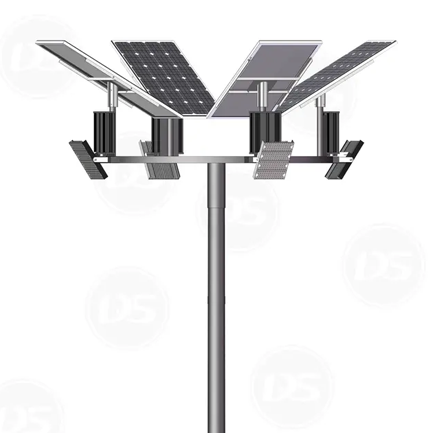
As global climate concerns intensify, many governments are setting ambitious carbon neutrality and Net Zero goals. In line with these goals, solar energy street lights provide a clear path to reducing carbon emissions from traditional street lighting systems, which often rely on fossil-fuel-powered grids. These solar-powered lights operate independently of the electrical grid, which significantly reduces their carbon footprint.
By 2026, cities will face stricter regulations regarding carbon emissions, and solar energy street lights will be central to meeting these mandates. The widespread adoption of solar street lights will be key in helping municipalities achieve their environmental targets, providing a scalable solution for reducing overall carbon emissions in public infrastructure.
The push for solar adoption will be further supported by government incentives, grants, and subsidies aimed at reducing the initial cost of solar energy street lights. Many governments offer funding programs to support the transition to renewable energy sources, including the installation of solar-powered street lighting systems. This financial support can reduce the upfront cost of solar street light systems, making them more affordable for cities, especially those with limited budgets for infrastructure.
With policy support accelerating adoption, solar energy street lights will become a more attractive option for municipalities looking to improve energy efficiency and reduce their carbon footprint.
One key advantage of solar energy street lights is their grid independence. During power outages or natural disasters, solar street lights can continue to provide critical illumination without relying on the electrical grid. This resilience will become more important by 2026, as cities are expected to face more extreme weather events due to climate change.
The ability to maintain lighting during power failures will enhance public safety, especially in urban areas where lighting is crucial for preventing crime and improving mobility after dark. Solar-powered street lights also reduce the risk of electrical fires and failures associated with traditional lighting systems during natural disasters.
Table 1 — Policy Drivers for Solar Street Lighting Adoption
Policy Driver |
Description |
Climate Mandates |
Solar street lights help cities meet Net Zero and carbon-neutral goals by reducing emissions. |
Government Incentives |
Funding and subsidies make solar energy street lights more affordable. |
Disaster Preparedness |
Solar street lights ensure reliable lighting during power outages caused by extreme weather events. |
Note: As cities face more extreme weather and climate-related disruptions, solar energy street lights will be critical for maintaining safety and reducing reliance on the grid.
By 2026, solar energy street lights will be part of a broader smart city ecosystem. These lights will feature integrated smart sensors and communication technologies that allow for real-time monitoring, remote management, and energy optimization. Smart solar lights will be able to adjust their brightness based on traffic flow, pedestrian movement, and ambient light, significantly reducing energy consumption.
Additionally, smart solar street lights will be able to self-diagnose issues and alert maintenance teams when repairs or upgrades are needed. This will reduce downtime and improve the overall lifespan of the lights, while also lowering maintenance costs.
Artificial Intelligence (AI) will be used to optimize energy consumption in solar energy street lights by 2026. AI algorithms will analyze factors like time of day, weather conditions, and traffic patterns to automatically adjust light levels. This ensures that the lights only consume energy when needed, reducing unnecessary energy waste.
For instance, during low-traffic periods at night, the system could reduce the brightness of the lights, saving energy while still providing sufficient illumination. AI will also be able to predict when additional energy is needed, allowing the system to optimize battery charging times and increase battery life.
In areas where sunlight is inconsistent or during periods of cloud cover, hybrid systems that combine solar power and wind energy will become more prevalent. These systems will allow solar street lights to continue functioning during periods of low sunlight by harnessing wind energy. This hybrid model will make solar street lights even more reliable and efficient in regions with varying weather patterns.
Table 2 — Technological Innovations for Solar Street Lights
Technology |
Impact |
IoT Integration |
Enables smart monitoring, energy management, and predictive maintenance. |
AI Optimization |
Reduces energy consumption by adjusting light levels based on data analysis. |
Hybrid Energy Systems |
Combines solar and wind power for a more consistent energy supply. |
Note: Hybrid systems will ensure that solar energy street lights provide continuous power, even during periods of low sunlight.
In 2026, solar energy street lights will play a significant role in smart cities. These lights will be integrated with other smart infrastructure systems, such as traffic lights, environmental sensors, and public safety systems. As part of a connected urban environment, solar street lights will provide data that can be used for smart city management, such as monitoring air quality, traffic flow, and energy consumption.
As the cost of solar energy street lights continues to fall, rural and off-grid areas will increasingly adopt this technology. For regions with unreliable access to the electrical grid, solar street lights provide a reliable and affordable alternative, improving both public safety and economic activity. By 2026, it is expected that solar street lights will become the standard for street lighting in these areas, providing a solution to energy access challenges.
One of the primary benefits of solar energy street lights is their ability to enhance safety and security in urban areas. Properly illuminated streets reduce crime and accidents. By 2026, solar energy street lights will feature advanced motion sensors and adaptive lighting, ensuring optimal brightness in high-traffic areas and reducing energy usage during low-traffic hours.
Table 3 — Future Trends of Solar Street Lights
Trend |
Expected Impact |
Smart City Integration |
Solar street lights will become part of smart city infrastructure, enhancing urban management. |
Global Expansion |
Solar street lights will expand to rural and off-grid areas, improving accessibility. |
Enhanced Features |
Motion sensors and adaptive lighting will improve safety and energy efficiency. |
Note: The integration of solar energy street lights into smart city systems will enhance public safety and operational efficiency.
In conclusion, solar energy street lights are set to revolutionize urban lighting by 2026. Their energy efficiency, cost-effectiveness, and integration with smart city infrastructures make them a key player in sustainable city planning. As technology advances, these lights will become even smarter, more reliable, and better suited for the challenges of modern urban environments.
For reliable and cutting-edge solar energy street lights, Dison Group provides innovative solutions designed to meet the needs of tomorrow's smart cities. Their products offer high efficiency, durability, and long-term value, helping cities reduce energy costs while enhancing public safety and sustainability.
A: Solar energy street lights are lighting systems that use solar panels to convert sunlight into electricity, providing a sustainable and off-grid lighting solution for streets and public areas.
A: These lights work by capturing sunlight through solar panels during the day and storing energy in batteries. At night, the stored energy is used to power the LED lights, providing illumination without relying on the grid.
A: Solar energy street lights offer energy savings, reduce carbon emissions, and lower maintenance costs. They also ensure reliable lighting in areas without grid access, contributing to energy independence and sustainability.
A: The initial cost of solar energy street lights can be higher than traditional street lights, but they save on electricity bills and reduce long-term maintenance costs. Government incentives can also offset the initial investment.
A: Yes, solar energy street lights are designed to function in various weather conditions, including rainy or cloudy days, thanks to efficient battery storage and energy management systems that ensure consistent lighting.


