Views: 0 Author: Site Editor Publish Time: 2026-08-10 Origin: Site
Budgeting for municipal, commercial, or residential development lighting requires moving past rough estimates to understand the exact variables that dictate infrastructure expenses. Relying on baseline unit figures often leads to severe budget overruns. Project planners frequently fail to account for site preparation, wind load compliance, material lifespan, and complex installation requirements. Furthermore, conflicting online estimates create confusion between bare hardware and fully loaded assemblies.
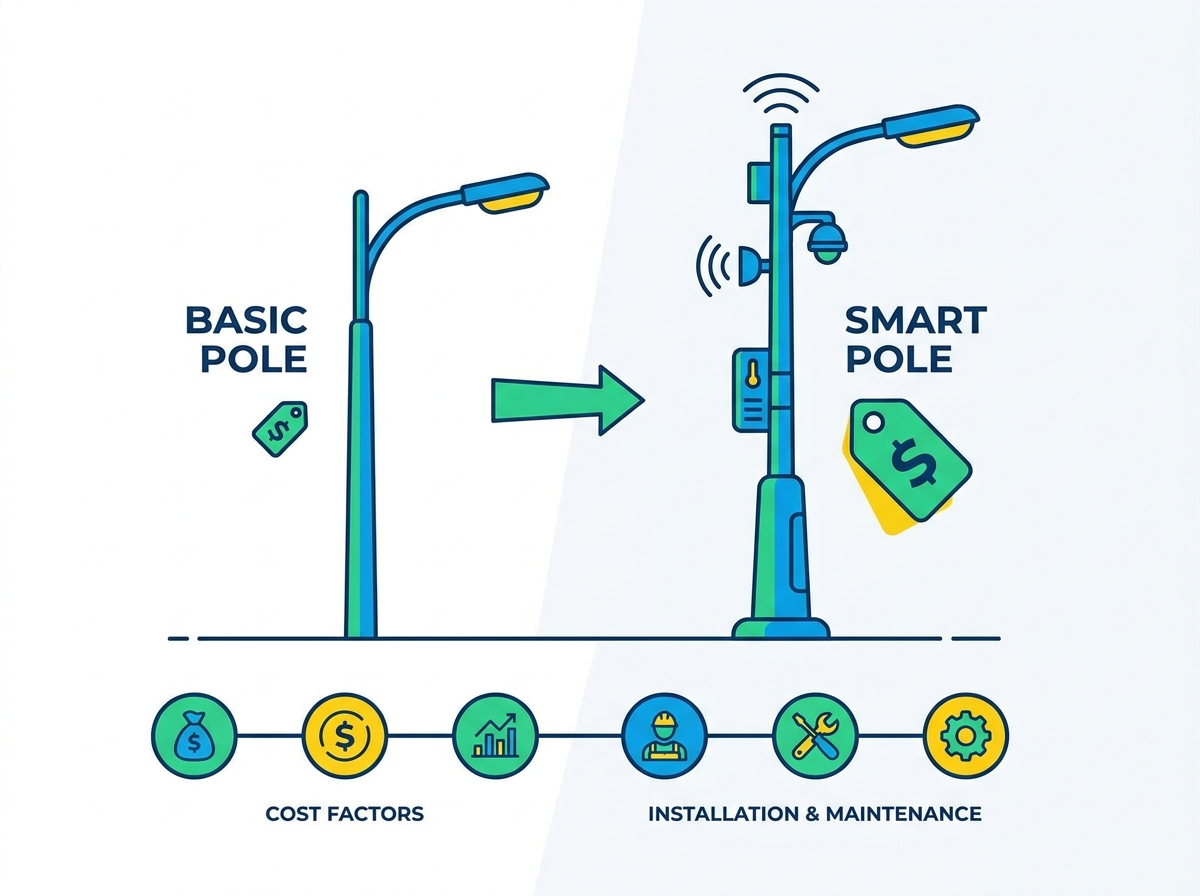
This guide breaks down the true financial scope of a street light pole, analyzing material trade-offs, installation variables, and compliance standards. By evaluating these core components, project managers and urban planners can facilitate accurate budgeting, streamline vendor evaluation, and avoid the hidden expenses that frequently derail large-scale infrastructure developments.
Baseline Hardware Costs: A standard street light pole heavily depends on material (steel vs. aluminum), height (15 to 40 feet), and whether the quote includes the luminaire.
Installation Multipliers: Labor, trenching, foundation pouring, and grid connection frequently add substantial expenses per pole, often exceeding the cost of the hardware itself.
Material Trade-Offs: Upfront savings on standard steel poles must be weighed against the longevity and corrosion resistance of aluminum or fiberglass, particularly in coastal or high-humidity environments.
Table of Contents
Understanding the financial requirements of outdoor lighting starts with dissecting the individual components. Industry estimates vary wildly because vendors often quote different stages of the hardware package. A bare shaft represents only a fraction of the final installed unit. Procurement teams must identify exactly what is included in a manufacturer's submittal to avoid unexpected shortfalls during construction.
When sourcing infrastructure, you will encounter a massive gap between bare hardware and complete assemblies. A "pole only" quote typically includes just the vertical shaft and a welded base plate. It lacks the essential components required for actual illumination. A complete assembly bundles the vertical shaft with an LED luminaire, mounting brackets, a mast arm, base covers, and internal wiring. Comparing a bare shaft quote to a complete assembly quote is a common trap. If you purchase bare shafts, your electrical contractor will have to source the tenons, luminaires, and anchor bolts separately, which heavily inflates the final material budget.
The base hardware spectrum spans from basic low-height steel structures designed for residential cul-de-sacs to heavy-duty, architectural structures engineered for multi-lane highways. Raw material commodities markets heavily impact pricing volatility. Steel and aluminum trade on global indices. When these indices spike, manufacturers adjust their quotes accordingly. Locking in material rates early in the development cycle helps mitigate the risk of sudden commodity inflation. The physical dimensions also drive the material volume. A 40-foot highway structure requires exponentially more raw material than a 15-foot residential structure because the wall thickness must increase to support the taller lever arm and heavier wind loads.
The luminaire attached to the top of the structure represents a major portion of the hardware budget. Standard LED fixtures provide excellent baseline illumination, but municipalities increasingly demand high-output or smart-city enabled luminaires. These advanced units feature integrated photocells, motion sensors, and wireless mesh network nodes for remote monitoring. The industry has entirely phased out High-Pressure Sodium (HPS) fixtures. Standardizing on LED technology reduces energy consumption and minimizes the frequency of bucket-truck dispatches for bulb replacements. Furthermore, the light distribution pattern—such as Type II for narrow roadways or Type IV for wide parking lots—dictates how many total units you need to purchase for the site.
You cannot install a vertical structure without proper anchoring. Foundation and mounting hardware include heavy-duty anchor bolts, decorative base covers, and vibration dampeners. Anchor-base installations require poured concrete footings engineered to specific depths based on soil conditions. The anchor bolts, typically heavy galvanized J-bolts, must be set into the wet concrete using a precise template that matches the bolt circle diameter of the base plate. Direct-burial methods bypass the concrete footing requirement by embedding the lower portion of the shaft directly into the earth. While direct-burial methods reduce upfront concrete expenses, they limit future replacement options and are generally restricted to specific fiberglass or wood applications.
The structural material dictates both the initial procurement budget and the lifespan of the infrastructure. Selecting the wrong material for your specific geographic environment guarantees premature failure and expensive replacement cycles. Engineers must evaluate the local climate, wind zones, and aesthetic requirements before finalizing the material specification.
Steel remains the most common choice for roadway illumination. It offers exceptional structural strength and rigidity, making it ideal for high wind zones and heavy luminaire payloads. From a procurement standpoint, standard carbon steel is generally the most cost-effective option upfront. However, steel carries inherent risks regarding rust and corrosion. If the manufacturer does not apply a high-quality hot-dip galvanized finish or a durable powder coat over a zinc primer, the metal will degrade rapidly when exposed to road salts or moisture. Once rust penetrates the base of a steel shaft, the structural integrity is compromised, requiring immediate replacement.
Aluminum requires a higher initial investment but provides distinct environmental advantages. It is naturally corrosion-resistant, making it the superior choice for coastal areas, coastal highways, and regions with high humidity. Aluminum is also significantly lighter than steel. This reduced weight lowers freight surcharges and allows installation crews to use smaller, less expensive lifting equipment. The primary drawback is lower structural rigidity. To achieve the same wind load ratings as a steel counterpart, an aluminum shaft must feature thicker walls or a larger base diameter. Aluminum is often spun into decorative shapes for historical downtown districts or high-end commercial developments.
Specialty applications often call for fiberglass or concrete. Fiberglass offers non-conductive properties, making it exceptionally safe in areas prone to electrical faults. It boasts zero corrosion risk and resists degradation from road chemicals. However, fiberglass can suffer from UV degradation over several decades if not properly coated with a polyurethane finish. Concrete provides maximum durability, extreme mass, and high theft deterrence. It withstands severe impacts and requires virtually zero surface maintenance. The downside of concrete is its massive shipping weight, which heavily inflates freight and heavy-crane rental expenses during the installation phase.
Material Type | Corrosion Resistance | Structural Rigidity | Weight / Logistics | Ideal Application Environment |
|---|---|---|---|---|
Steel | Low to Medium (Requires coating) | Very High | Heavy | Highways, high wind zones, inland commercial |
Aluminum | High (Natural resistance) | Medium | Lightweight | Coastal regions, humid climates, decorative |
Fiberglass | Very High (Zero rust) | Medium | Very Lightweight | Parks, residential pathways, highly corrosive areas |
Concrete | High | Extreme | Very Heavy | High-vandalism areas, heavy industrial zones |
Procuring the hardware is only the first step. The physical installation process introduces a complex web of labor rates, heavy machinery rentals, and site preparation tasks that frequently exceed the cost of the hardware itself. General contractors must coordinate multiple trades to execute a successful installation.
Before a single vertical structure goes up, crews must prepare the site. Excavating trenches for underground wiring is a major budget driver. The expense per linear foot fluctuates wildly based on terrain and existing infrastructure. Trenching through standard dirt is straightforward. Encountering rocky soil, high water tables, or existing utility lines requires specialized directional boring equipment, which exponentially increases labor hours. Soil conditions also dictate foundation pouring requirements. Loose or sandy soil demands deeper drilled shafts and larger concrete volumes to ensure stability. A standard sonotube foundation requires excavation, rebar cage assembly, and precise concrete pouring.
Connecting the infrastructure to the local power grid requires licensed commercial electricians. Electrician hourly rates vary by region but always represent a premium labor expense. Crews must pull heavy-gauge copper wire through underground PVC conduit, splice the connections at the handhole, and run the wiring up the interior of the shaft to the luminaire. Beyond the physical wiring, projects must account for local utility connection charges. Commercial grids may require step-down transformers or specialized circuitry to handle the voltage requirements of a multi-unit lighting array. Proper load balancing and conduit routing are essential to prevent future electrical faults.
Bureaucracy adds its own layer of expense. Installing infrastructure on private property, such as a vacant parcel or a commercial driveway, involves administrative hurdles. Landowners must secure zoning approvals, electrical permits, and sometimes environmental clearances. Municipal installations require strict adherence to city planning guidelines. The time spent navigating local permit offices, paying application fees, and scheduling mandatory municipal inspections must be factored into the overall project timeline and budget. Working in the public right-of-way also requires approved Maintenance of Traffic (MOT) plans and lane closures.
Hoisting a 40-foot metal shaft into the air requires specialized machinery. Daily rental rates for bucket trucks, augers for drilling foundations, and cranes add up quickly. If a project experiences delays due to weather or permit issues, these rental fees continue to accumulate. Furthermore, oversized loads incur heavy freight and delivery surcharges. Coordinating the delivery of materials to coincide exactly with the arrival of the rental equipment and the installation crew is critical for minimizing idle time.
Site Excavation: Auger trucks drill the foundation holes to the depth specified by the structural engineer.
Foundation Pouring: Crews insert sonotubes and rebar cages, pour the concrete, and set the anchor bolts using a wooden template.
Curing Time: The concrete must cure for several days to achieve the required compressive strength before bearing any weight.
Trenching and Conduit: Electricians dig trenches between the foundations and lay PVC conduit for the electrical lines.
Hardware Assembly: Workers attach the luminaire, mast arm, and internal wiring to the shaft while it rests horizontally on the ground.
Hoisting and Leveling: A crane lifts the entire assembly onto the anchor bolts. Crews use leveling nuts beneath the base plate to ensure the structure is perfectly plumb.
Final Wiring: Electricians complete the splices inside the handhole and attach the base cover to conceal the anchor bolts.
Engineering specifications dictate the physical dimensions and structural integrity of the lighting infrastructure. Failing to match the hardware to local environmental regulations creates massive liability and guarantees a failed municipal inspection. Every component must be engineered to withstand the specific environmental stresses of the installation site.
The height of the structure directly dictates its application and exponentially increases material requirements. Residential neighborhoods and Homeowner Associations (HOAs) typically utilize 15 to 20-foot structures to provide adequate pedestrian illumination without causing light trespass into second-story bedroom windows. Commercial parking lots and highways require 25 to 40-foot structures to cast a wider footprint of light, reducing the total number of units needed. As height increases, the base diameter and wall thickness must also increase to maintain structural integrity. A taller structure acts as a longer lever arm, multiplying the force exerted on the base plate during high winds.
Wind load is a critical engineering factor. The Effective Projected Area (EPA) rating calculates how much wind resistance the entire assembly will generate. The size, shape, and aerodynamic profile of the luminaire, combined with the height of the shaft, dictate the required EPA rating. Engineers use local AASHTO (American Association of State Highway and Transportation Officials) wind zone maps to determine the maximum wind gusts the structure must withstand. Under-speccing a unit for a high wind zone creates a severe financial and safety risk. A structure that collapses during a storm due to an inadequate EPA rating results in catastrophic liability.
Strict adherence to city codes and Department of Transportation (DOT) standards is non-negotiable. Many municipalities now enforce dark-sky compliance, requiring International Dark-Sky Association (IDA) certified fixtures that direct light downward to minimize light pollution. Highway installations mandate breakaway bases. These specialized mounting systems, such as transformer bases or slip bases, are engineered to shear off upon vehicular impact, protecting the occupants of the vehicle. Breakaway requirements alter the foundation design and increase the complexity of the mounting hardware. You must verify these requirements with the local DOT before ordering any materials.
Navigating the procurement and installation process requires strategic planning. Avoiding common pitfalls ensures the project remains on schedule and within its allocated financial boundaries. Proactive management of the supply chain and site conditions prevents expensive rework.
Do verify soil conditions and local wind zones before selecting a foundation type and structural material. A geotechnical survey prevents expensive redesigns after the hardware has already shipped. Don't purchase fixtures without checking local dark-sky ordinances and municipal aesthetic guidelines. Installing non-compliant luminaires guarantees that the city will force you to tear them down and start over. Always request detailed submittal drawings from the manufacturer and have them stamped by a licensed structural engineer.
The manufacturing of heavy infrastructure involves complex global supply chains. Lead times for custom or high-demand units often stretch from 8 to 16 weeks. Delays in receiving raw materials can push project timelines into the winter months, complicating concrete pouring and trenching. To mitigate this, project managers should lock in quotes early and utilize blanket purchase orders to secure inventory before seasonal construction spikes drain manufacturer stockpiles. Coordinate delivery schedules so the anchor bolts arrive weeks before the main shafts, allowing concrete crews to pour the foundations while the metal is still being fabricated.
Attempting to save money by purchasing hardware that barely meets minimum requirements is a dangerous strategy. Installing units that fail to meet local wind-load regulations or breakaway mandates exposes the developer to massive liability. If a municipal inspector identifies under-specced hardware, they will halt the project and demand full replacements. Always build a safety margin into your EPA calculations and structural requirements. Upgrading to a thicker gauge of steel or a larger base diameter requires a slightly higher upfront investment but provides peace of mind during severe weather events.
Strategic purchasing significantly reduces overall project expenses. Bulk purchasing yields better per-unit rates from manufacturers. For massive developments, phased rollouts allow developers to spread the financial impact over several quarters. Most importantly, standardizing the exact type of street light pole across an entire development reduces long-term maintenance inventory. When every unit uses the same luminaire, driver, and mounting bracket, facility managers only need to stock a single set of replacement parts. This standardization also speeds up the installation process, as electrical crews become familiar with the specific wiring requirements of the chosen hardware.
Successfully executing a lighting infrastructure project requires looking far beyond the initial hardware quote. To ensure your next development stays on track, follow these actionable steps:
Order a comprehensive geotechnical soil report to determine exact foundation depth requirements before finalizing engineering plans.
Standardize your hardware specifications across the entire development to streamline installation and minimize future maintenance inventory.
Verify all local municipal codes, DOT breakaway mandates, and dark-sky compliance regulations with the planning office prior to issuing purchase orders.
Request itemized vendor quotes that explicitly separate the bare hardware, luminaire, mounting accessories, and freight to avoid hidden surprises.
Established in 1994, Dison Group manufactures street light poles, LED and solar street lights, smart lighting products, and solar power systems from its 47,000-square-meter facility. With integrated production equipment, technical personnel, and multi-stage quality control, the company supports project buyers with product customization, quality assurance, and after-sales service.
A: An anchor-base pole features a welded steel plate at the bottom and bolts onto a pre-poured concrete foundation using heavy-duty anchor bolts. A direct-burial pole has a longer shaft that is embedded directly into the ground without a concrete footing, backfilled with soil or gravel. Anchor-base models offer easier replacement if damaged, while direct-burial models eliminate concrete pouring requirements.
A: Wind load dictates the required structural thickness and base diameter of the shaft. Engineers calculate the Effective Projected Area (EPA) based on the luminaire's size and the shaft's height. The hardware must be rated to withstand the maximum historical wind gusts for that specific geographic region, as defined by AASHTO standards, to prevent structural failure.
A: Yes. Aluminum naturally forms a protective oxide layer that resists rust and corrosion caused by saltwater spray and high humidity. While steel can be galvanized or powder-coated, any scratch in the coating exposes the raw metal to rapid rusting in coastal environments. Aluminum provides superior longevity in these specific conditions.
A: LED luminaires consume significantly less energy than legacy High-Pressure Sodium (HPS) or Metal Halide fixtures. They provide superior color rendering, direct light more precisely to reduce light pollution, and boast lifespans that drastically reduce the frequency of maintenance dispatches for bulb replacements.
A: In almost all jurisdictions, yes. Even on private commercial or residential property, installing permanent electrical infrastructure requires zoning approval, electrical permits, and municipal inspections to ensure the wiring meets local safety codes and the structure complies with height and setback regulations.
A: EPA stands for Effective Projected Area. It is a calculation used to determine how much wind resistance a fixture and mounting arm will generate. Manufacturers use the EPA rating of the luminaire to ensure the selected vertical shaft has the structural rigidity required to support that specific fixture in local wind conditions.